Restaurants are built for parties of two and four. Conferences are built for two hundred. Almost nothing is built for twelve people who arrived separately and might, by the end of the evening, want to see each other again. That number, somewhere between eight and twenty, is where community actually forms, and it is the number YAH is designed around.
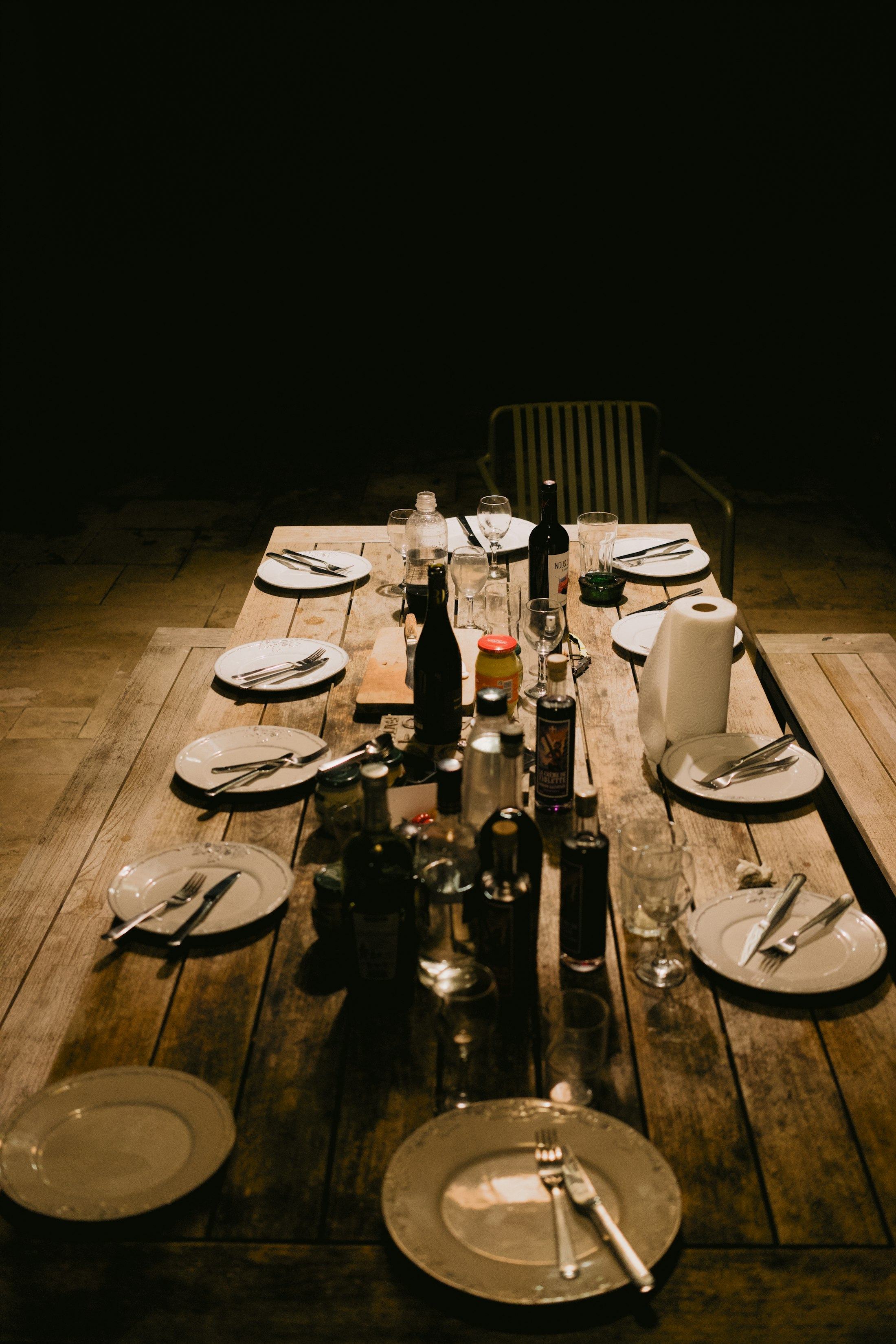
The tool is old and unfashionable: one long table. Not a choice of tables, not a buffet, not a menu with twenty options. One table under the cork oaks, one dinner cooked from what the land and the neighbours produced that week, served at one time. You sit where there is a seat. The person across from you might be a founder, a painter, a teacher, a family on their first evening. That is the point.
Small decisions
Whether a gathering works is decided by details that look trivial on a plan. The table is narrow enough to talk across, not only along. The light comes from candles and the fire, low enough that faces matter more than phones. Dinner starts late and is not hurried by a second seating. The kitchen is visible, so the people who cooked are part of the room. There is somewhere to go afterwards, a fire bowl and a sky, so the evening has a second act.
None of this needs to be explained to guests. They feel it, and they stay.
The people make the place.
From guests to community
The same logic runs through everything at YAH. Masterclasses are small so that the conversation continues over lunch. Retreats share the table with the rest of the house unless the host asks for exclusive use. Owners of the sixteen villas eat at the same table as the guests in the bungalows. Ceremonies and celebrations, the weddings and the birthdays, are simply the long table at its largest.
We do not think community can be programmed. But we are certain it can be prevented, and most hospitality does exactly that, politely and with excellent service. YAH removes the obstacles and then gets out of the way. The rest is up to the people who come.